The automotive industry is currently undergoing a rapid phase of digitalization and intelligentization. Advanced driver-assistance systems (ADAS), smart connected infotainment systems, and an ever-increasing number of precision sensors are making vehicles “smarter” than ever before. However, this technological leap is placing immense pressure on the vehicle’s automotive wiring harness system.
As wiring layout becomes increasingly complex, the limited space inside the vehicle becomes packed with dense cable bundles, resembling intricate spider webs. This not only consumes valuable space but also increases routing difficulty, presenting engineers with numerous challenges during the design phase. How to rationally plan the routing direction within this limited “small space”—ensuring efficient transmission of signals and electrical energy without mutual interference, while simultaneously managing weight and cost—has become a pressing challenge for automotive engineers. German Keyword: Kabelsatz (Wiring Harness) .
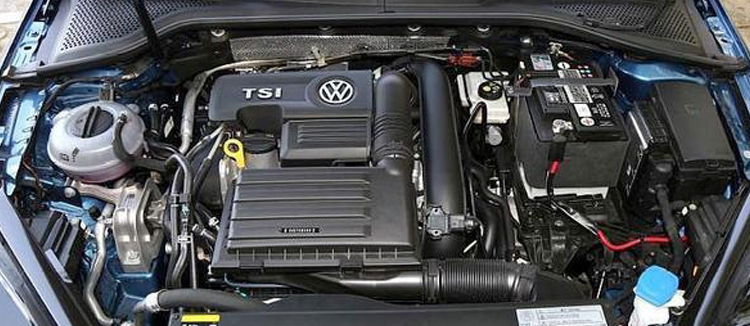
1. The Synergistic Value of Lightweighting and Cost Reduction
Lightweighting and cost reduction are not isolated objectives in automotive wiring harness design—they hold significant synergistic value that must be addressed holistically.
From a lightweighting perspective, it has a direct and critical impact on overall vehicle energy consumption and driving range. Research data indicates that for every 1 kg reduction in weight, the driving range of a new energy vehicle increases by approximately 0.5–1 km. This means that by reducing wiring harness weight, new energy vehicles can effectively extend range without increasing battery capacity.
Reducing cost is a key factor in enhancing automotive manufacturers‘ profit margins and product competitiveness. In a competitive market, cost advantages often translate into pricing power, making products more attractive. Lightweighting and cost reduction are not mutually exclusive but rather mutually reinforcing. Through design optimization, material innovation, and process improvements, synergistic development of both can be achieved—representing the core direction of automotive wiring harness technology advancement. German Keywords: Gewichtsreduzierung (Weight Reduction), Kostensenkung (Cost Reduction) .
2. Routing Optimization
2.1 Minimize Electrical Circuit Length
Leveraging advanced 3D simulation technologies—such as CATIA and UG NX—combined with the vehicle’s spatial structure including A/B/C pillars, chassis, and roof, designers can plan the most rational wire routing to ensure the shortest possible paths. Placing the battery, DCDC converter, generator, and under-hood fuse box on the same side and close to one another can greatly reduce the length of power supply wires.
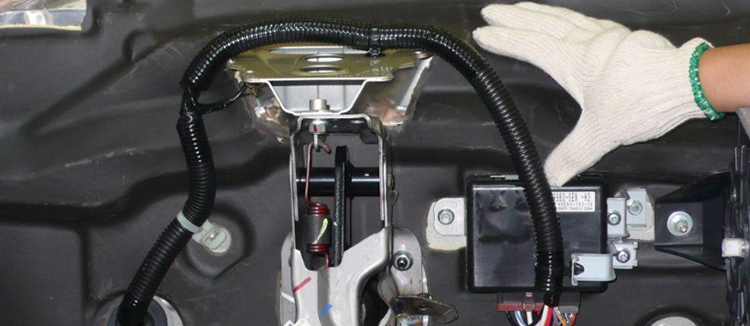
Shortening electrical circuits not only reduces weight but also lowers material costs and decreases voltage drop losses in the wiring. For large-gauge wires such as the battery positive cable, the benefits of shortening the circuit are particularly significant.
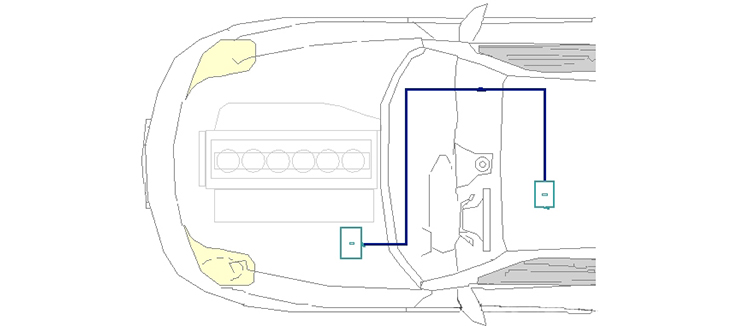
1): Circuit Routing Before Optimization:
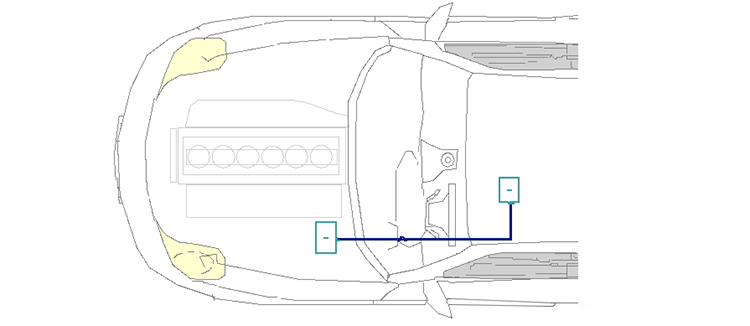
2): Circuit Routing After Optimization
2.2 Minimize Wiring Harness Segmentation
Increasing wiring harness segmentation inevitably requires adding more inline connectors between harness sections. Each added connector increases weight, cost, and voltage drop across the circuit, which can compromise electrical performance stability. Therefore, reducing the number of segments should be a priority during the design phase.
2.3 Modular Wiring Harness Design
Adopting modular segmented design is a critical approach to routing optimization. Taking the Tesla Model 3 as an example, through modular design, its total wiring harness length was reduced from approximately 5 km in traditional vehicles to just 1.5 km. This dramatic change demonstrates the significant advantages of modular segmented design in lightweighting, while also bringing higher production efficiency and lower costs to automotive manufacturing.
Emerging zonal architectures—where vehicle wiring is physically partitioned and governed by simple zone controllers feeding a central unit—can achieve approximately 15–20% weight savings compared to traditional distributed architectures.
3. Structural Optimization
3.1 Connector Integration and Anti-Mistake Design
Standardizing connector specifications and optimizing design is crucial. Tesla has set an excellent example by simplifying over 200 types of connectors into just 6 standard interfaces, covering 90% of application needs. This not only reduces the number of connector types, lowering mold and inventory costs, but also makes production and assembly processes more efficient.
At the same time, connectors should be placed in locations that are easy to assemble, with sufficient operating space for workers. Avoid vertical installation of connectors to prevent short circuits caused by water accumulation, thereby enhancing the reliability of the connector system.
The industry is also seeing a surge in demand for miniaturized connectors that reduce harness size while still meeting high-bandwidth, power-delivery, and safety requirements. Miniaturization has become one of the most important goals in modern automotive connector design.
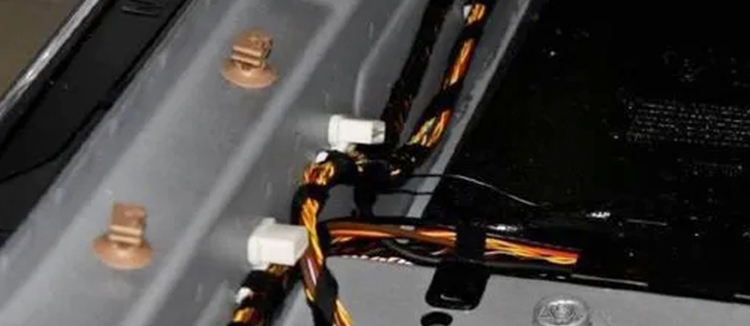
3.2 Fixing Point Optimization
Proper placement of fixing points is essential for wiring harness stability and safety. Reuse existing fixing components such as clips, cable ties, and rubber parts wherever possible to avoid creating new parts. At the same time, minimize the variety of clips and cable ties—avoid having a mix of 7 mm round hole clips and 7×12 mm slotted hole clips on the same harness, as this complicates manufacturing and processing.
Avoid unnecessary fixing points. If the spacing between fixing points can reach 300 mm, designing it at 150 mm serves no purpose—it only increases wiring harness weight and cost while also wasting labor time on the assembly line.
In terms of fixing methods, lightweight cable ties and clips can be used to replace traditional metal brackets, reducing the overall weight of the harness.
3.3 Protection Scheme Optimization
In material selection for protective coverings, thin-wall PVC tape can be used for non-critical areas, with thickness reduced by 20% to meet basic protection requirements while reducing weight. In high-temperature areas such as the engine compartment, high-temperature resistant wires with silicone rubber sleeves rated for temperatures above 200°C should be used to protect the harness from heat damage.
Through such optimization, the weight of covering materials can be reduced by 15–20% while maintaining IP67 protection, achieving a balance between protection and lightweighting. Additionally, the adoption of lightweight aluminum automotive cable systems is gaining momentum as a replacement for traditional copper cables, significantly reducing harness weight while lowering material costs.
Recent data shows that as of 2025, aluminum conductors have accelerated their replacement of copper conductors in automotive applications. Lightweight aluminum cable technology—combined with thin-wall insulation and carbon fiber protective sleeves—can reduce overall vehicle wiring harness weight by up to 60%, extending driving range by 5–10%. In addition, the 0.19 mm² multi-win composite wire has been shown to reduce copper content in automotive low-voltage signal wires by 60% through lightweight harness structure innovation.
4. Emerging Technologies and Future Outlook
The lightweighting and cost reduction of automotive wiring harnesses is a systematic engineering endeavor. With the rapid development of new energy vehicles and intelligent driving, wiring harness technology is entering a critical period of transformation—seeking to “reduce weight without compromising quality and reduce cost without sacrificing safety.”
Emerging technologies such as FFC (Flexible Flat Cable) are also reshaping the industry. The Geely-TE Connectivity joint laboratory has pushed FFC to new heights of automotive-grade reliability, achieving an 80% reduction in space occupation while maintaining high mechanical performance and vibration resistance.
AI-driven design tools are further revolutionizing the industry. An AI-based multi-zonal clustering approach has been shown to reduce design time and produce measurable material and cost savings—achieving a total wire mass of 22.92 kg for 417 ECUs in a 12-zone configuration, outperforming both lower and higher zone counts. Meanwhile, reinforcement learning-based adaptive wire gauge selection has demonstrated harness mass reductions of over 34% while maintaining full electrical compliance.
For automotive manufacturers and suppliers alike, only through interdisciplinary collaboration, data-driven design, and continuous technological iteration can they gain a competitive edge in this dual race of efficiency and cost reduction.
Conclusion
The journey toward lightweighting and cost reduction in automotive wiring harness design is not a single step but a continuous process of optimization—from routing and structural design to material innovation and emerging technologies. Every gram saved and every euro reduced counts, not only for the profitability of automakers but also for the sustainability and performance of future vehicles. By staying at the forefront of these technologies, engineers and manufacturers can ensure they are ready for the next generation of smarter, lighter, and more efficient vehicles.
Runtian Industrial Park, No. 3 Futian Road, HetianXia, Shijie Town, Dongguan City, Guangdong Province China
Rm 3104 Huarong BLDG No.178 Mingtian Rd Futian Central Shenzhen City China
1859, tò ban do so 10, khu pho 1, Phwòng Vinh Tân, Thành pho Tân Uyên, Tinh Bình Dwong, Viet Nam


© 2026 Aichie Tech Electronics Co Ltd.All Rights Reserved.
XML Privacy Policy