Have you ever been baffled by the maze of wires under your dashboard when inspecting your vehicle? Those colorful cables and nylon tapes aren‘t just for decoration; they are the lifeline of your car. Understanding the electrical system is crucial for any professional mechanic or DIY enthusiast.
As modern vehicles evolve into electronic control units (ECUs) on wheels, the internal power supply wire harness has become the central nervous system of the vehicle. Today, we dive deep into the standards of wire color coding, cross sectional area, and wire numbering to help you master the secrets of automotive electronics.
1. The Art of Wire Color Coding
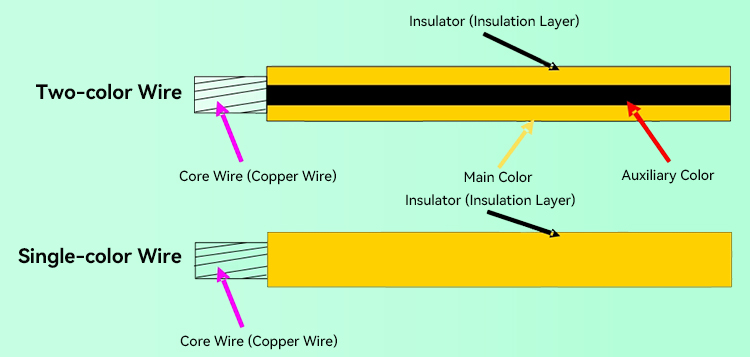
Color coding is a standardized method used to distinguish different functions within the vehicle electrical system. Whether it's the SAE J1128 standard in North America or the ISO 6722 standard in Europe, the color of the insulation tells a precise story.
Single Color Wires
Red (R): Typically indicates Battery Positive (B+) or constant power supply.
Black (B): The standard for Ground (GND).
Yellow (Y): Often used for ignition-switched power.
Two-Tone Wires
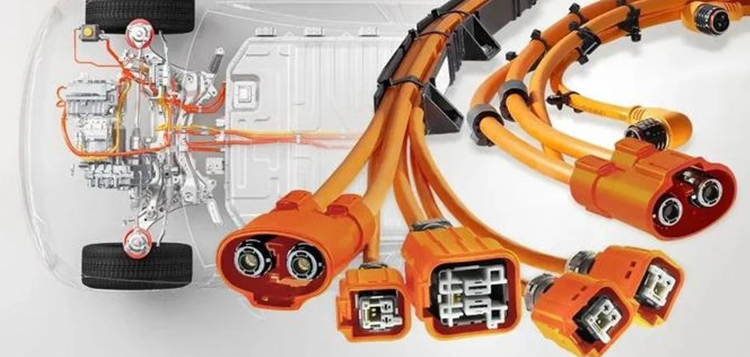
In complex wiring looms, two-tone wires help differentiate specific circuits. For instance, Red/Black (RB) often signifies a power wire controlled by a ground signal. High-voltage harnesses used in new energy vehicles usually feature bright orange sheathing to warn maintenance personnel of electrical hazards.
2. Selecting the Right Cross Sectional Area
The cross sectional area of a wire determines its current carrying capacity. Using a wire that is too thin can lead to voltage drop, malfunction, or even fire. Below is a detailed automotive wire gauge selection guide for various circuits:
3. Wire Varieties and High-Temperature Resistance
Not all wires are created equal. The harsh environment of an engine bay requires specific materials.
4. Wire Numbering and OEM Specifications
Understanding the wire numbering on a schematic is half the battle won. Manufacturers follow strict guidelines, such as DIN 76722 for cable identification codes.
5. Common Misconceptions Clarified
Even experienced technicians sometimes fall into traps when dealing with automotive wiring. Let’s clear up three of the most persistent myths.
Misconception 1: Household electrical wire works just fine in a car.
Some people assume that any copper wire will do. This is dangerous. Household wire typically uses a solid copper core, which cannot withstand the constant vibration, bending, and temperature fluctuations inside a vehicle. Over time, vibration will cause the solid core to crack, leading to an intermittent short or open circuit. Automotive applications require stranded copper automotive primary wire (such as TXL or GXL), which offers flexibility and fatigue resistance. Never use solid-core wire for car repairs.
Misconception 2: 12V and 24V systems are interchangeable with the same wire thickness.
Heavy-duty trucks and commercial vehicles often use 24V electrical systems, while passenger cars use 12V. For the same electrical load (measured in watts), a 24V system draws only half the current of a 12V system. This means that a smaller cross sectional area can be used for the same power delivery. Conversely, if you take a wire designed for a 24V truck and use it in a 12V car for the same device, you might actually be overspecifying (which is safe but heavy), but the real risk is the opposite: using a wire too thin from a 12V system on a 24V system could cause dangerous overheating. Always match the wire gauge to the voltage and current requirements.
Misconception 3: All high-temperature wires are the same.
When working in the engine compartment, people often grab any wire labeled “high-temp”. But standards matter. For example, GXL (cross-linked automotive wire) is rated for higher temperatures and better abrasion resistance than GPT. In Europe and Japan, standards like FLRY or AVSS have different thermal ratings. If you replace a TXL wire (rated up to 125°C or more) with a standard GPT wire (usually rated 80°C), the insulation will quickly become brittle and crack under the hood. Always check the temperature class printed on the wire insulation.
6. Quality Control and Maintenance
To ensure the reliability of the connectors and the harness, modern manufacturing processes rely on strict quality control (QC) systems like IATF 16949 and PPAP. When inspecting your car's wiring, look for chafing against metal edges, corroded terminals, and broken zip ties.
Conclusion
From the simple color code to the complex wire harness diagram, every standard exists to ensure your safety. Whether you are sourcing bulk wire for a restoration project or troubleshooting a short circuit, knowing your TXL from your GPT makes all the difference. Avoiding common misconceptions will not only save you time and money but also prevent electrical fires and component damage.
Welcome Inquiries
For more information, please feel free to contact Aichie Tech Electronics Co Ltd.
Email:sales03@aichie.com
Tel/Whatsapp: +86 18027502150
Runtian Industrial Park, No. 3 Futian Road, HetianXia, Shijie Town, Dongguan City, Guangdong Province China
Rm 3104 Huarong BLDG No.178 Mingtian Rd Futian Central Shenzhen City China
1859, tò ban do so 10, khu pho 1, Phwòng Vinh Tân, Thành pho Tân Uyên, Tinh Bình Dwong, Viet Nam


© 2026 Aichie Tech Electronics Co Ltd.All Rights Reserved.
XML Privacy Policy